
Overview
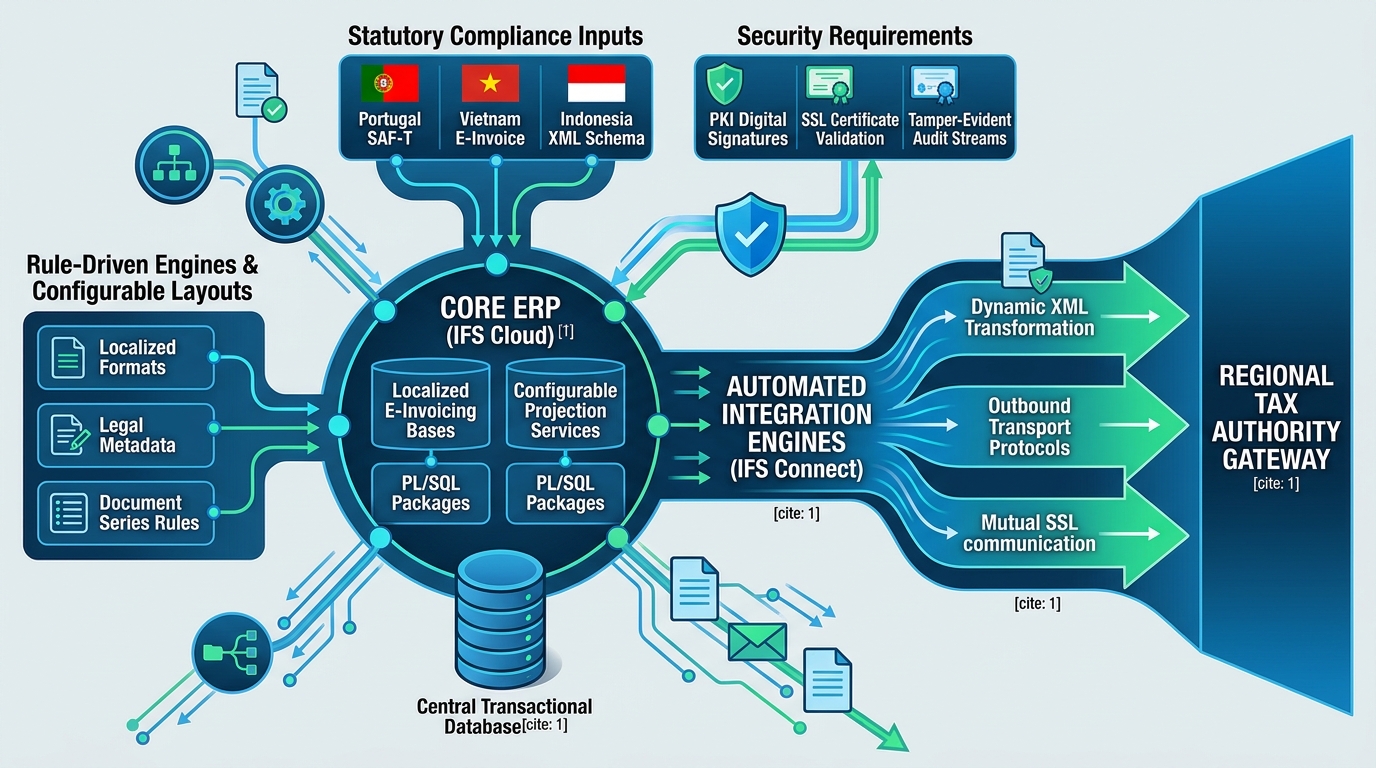
Legal E-Invoicing within ERP architectures (such as IFS Cloud) covers the automated generation, real-time validation, and secure transmission of structured electronic financial records and transport documents to meet regional statutory tax regulations. Across international jurisdictions (e.g., Portugal, Vietnam, and Indonesia), tax authorities mandate direct, tamper-proof reporting pipelines to enforce real-time auditability.
Problem
Strict Statutory Compliance & Fragmented Rules: Tax agencies continually update local regulatory formats, requiring specialized XML schemas, dynamic numbering series, and legal metadata (such as specific Delivery Reasons or Document Series).
Security & Authentication Requirements: Direct transmission demands strict security measures, including PKI digital signatures, mutual SSL certificate validation, and tamper-evident audit streams (e.g., SAF-T compliance).
ERP Integration Friction: Translating core transactional data into region-specific formats without altering central business logic introduces significant architectural overhead and risks breaking standard invoice processing.
Solution
Extensible Core Infrastructure: Implementing localized e-invoicing bases within the core framework to abstract regional requirements into configurable projection services, PL/SQL packages, and database layers.
Automated Integration Engines: Utilizing robust integration tools (such as IFS Connect) to execute dynamic XML transformations, handle outbound transport protocols, and guarantee secure mutual SSL communication directly with tax authority endpoints.
Configurable Layouts & Rules: Deploying rule-driven engines and configurable reporting definitions to dynamically apply localized formats, PKI certificates, and required metadata based on company, country, and transaction attributes.